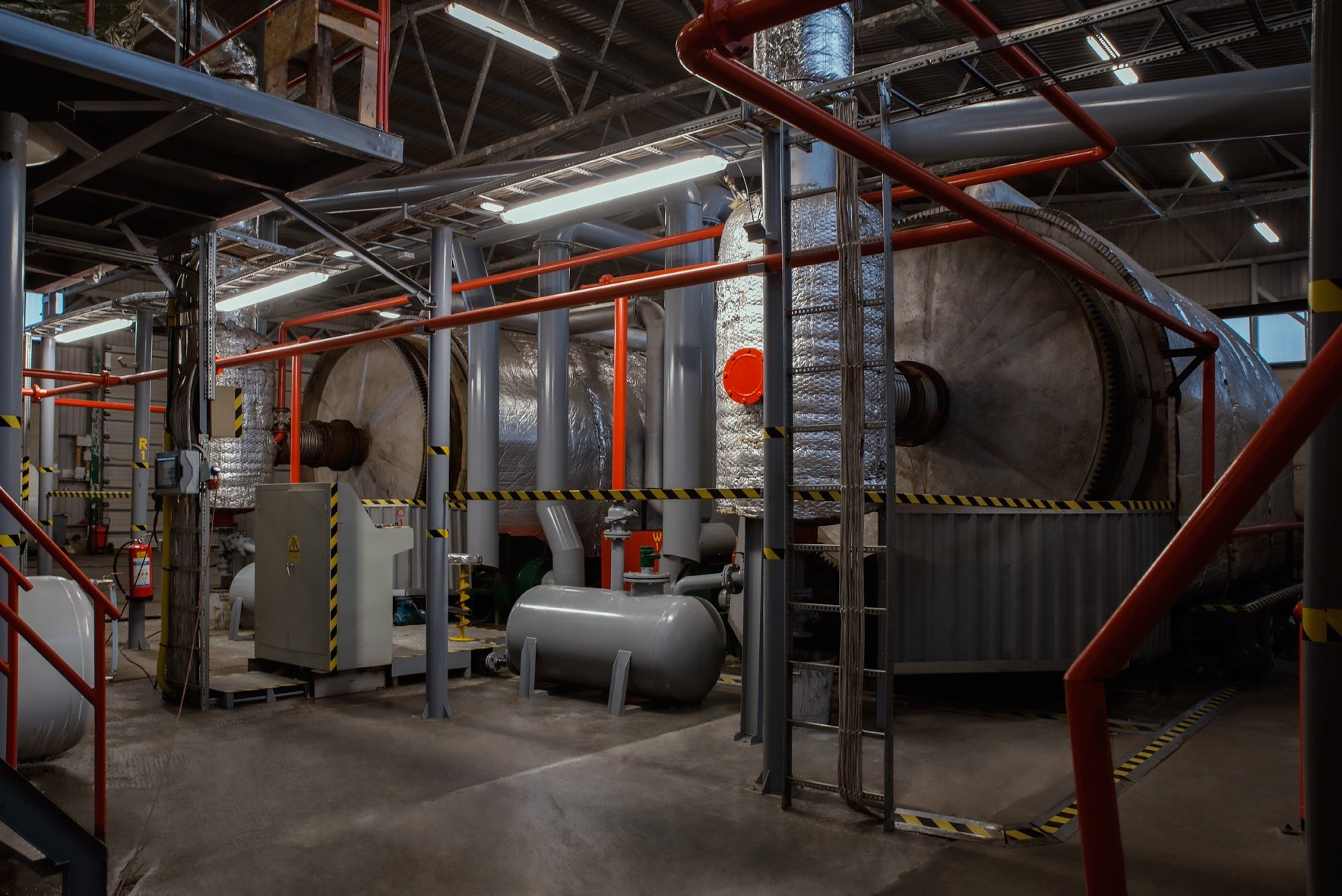
GRENECO Recycling designs and delivers modular pyrolysis systems for plastics, tyres, biomass, and selected industrial residues — from engineering concept to operational startup.
GRENECO Recycling designs, manufactures, and delivers turnkey thermochemical recycling plants. We convert hydrocarbon-rich industrial waste — tyres, plastics, oil sludge — into commercially valuable output streams at industrial scale.
We do not sell concepts. We deliver operational systems: engineered, assembled, installed, commissioned, and supported with long-term accountability.
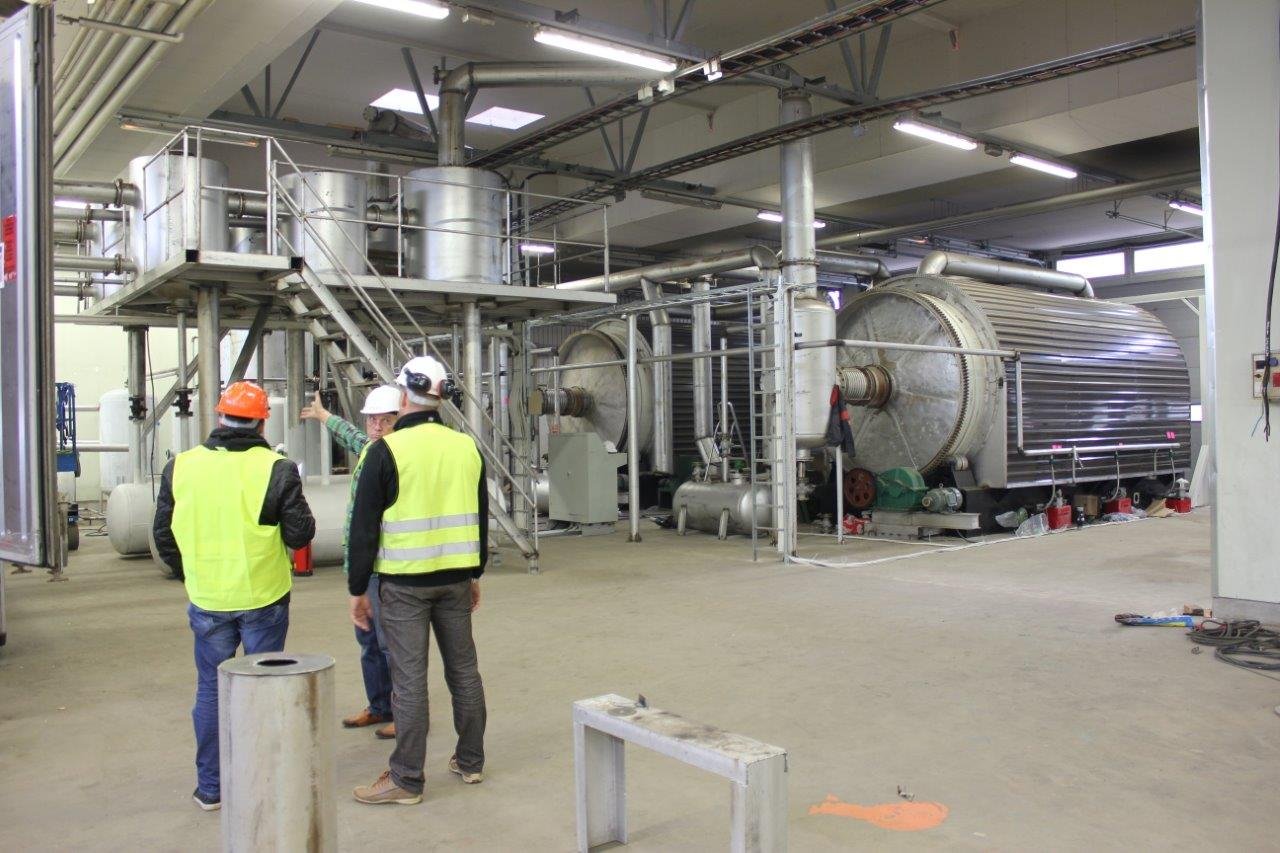
Scalable architecture for phased implementation. Capacity can be expanded without redesigning the core process or control system.
Solutions designed for continuous industrial operation — not laboratory or pilot-scale concepts.
Process configuration adapts to feedstock type, output targets, site utilities, and regulatory context.
From concept through commissioning and startup — GRENECO Recycling maintains single-point accountability throughout.
GRENECO Recycling's technology development has received European recognition, industry support, and academic validation.
SME Instrument Phase 1 support under the European Commission's Horizon 2020 framework programme.
European Commission Seal of Excellence — awarded to high-quality projects exceeding evaluation thresholds.
Letter of Support from ETRA — European Tyre and Rubber Association, representing industry endorsement.
Cooperation with Tallinn University of Technology for academic research and process validation support.
Industrial engagement for pyrolysis oil offtake for new plastics production — confirming product market pathways.
Working with waste operators, recyclers, energy companies, and project developers across Northern and Eastern Europe.
"GRENECO Recycling's modular approach removed barriers we typically face with thermochemical projects. The plant was operational within weeks of site delivery — a genuine difference from other engineering offers."
"For operators who need a real project rather than a concept deck, GRENECO Recycling is one of the few teams that integrates feedstock logic, process engineering, and commercial thinking from day one."
Commercial Plant · 2014First commercial-scale tyre pyrolysis reference. Turnkey delivery including process design, manufacturing, installation, and commissioning.
View Project →Paldiski · Estonia · 2016Engineering and production reference for multiple feedstocks. Includes Horizon 2020-related experimental work and operating data generation.
View Project →Kraków · Poland · 2024Conversion of a tyre batch plant into a semi-continuous plastic unit. Capacity upgraded from 8 t/day tyres to 20 t/day plastics.
View Project →High-Temperature · 2024Plant for conversion of organic waste into combustible gas. Suitable for RDF, husks, sawdust, oily waste, sludge, and other organic fractions.
View Project →Overview of GRENECO Recycling capabilities, delivery model, and project implementation approach for thermochemical recycling.
Request Document →Non-confidential summary of the GRENECO Recycling pyrolysis process: principles, feedstock criteria, output products, and plant architecture.
Request Document →Answers to common questions during project evaluation: feedstock criteria, yields, site requirements, automation, and support arrangements.
Read FAQ →The European Commission has published revised recycling rate targets for end-of-life tyres under the updated ELV Regulation, with thermochemical pathways now explicitly recognised as contributing toward material recovery quotas.
Two major European rubber producers have confirmed acceptance of REACH-registered rCB from tyre pyrolysis as a partial substitute for virgin N550 carbon black.
Pyrolysis oil from waste plastic and tyre processing is trading at or above fuel oil parity in several Baltic and Nordic markets, reflecting growing industrial buyer demand.
Tell us your feedstock, location, target capacity, and project goals. Our engineering team responds with a direct technical assessment.
GRENECO Recycling structures solutions around feedstock type, output strategy, and delivery scope.
HDPE, LDPE, PP, PS, ABS and mixed industrial plastics
Solutions for selected plastic streams where thermochemical conversion and downstream product strategy are technically and commercially relevant. Polyolefin-rich streams (HDPE, LDPE, PP) produce high-yield liquid oil fractions with calorific value comparable to fuel oil.
Mixed or contaminated plastic streams require pre-assessment. Halogenated plastics require separate treatment logic and are evaluated project-specifically.
Passenger, truck and OTR tyres — whole or shredded
GRENECO Recycling's primary legacy feedstock. Tyre-derived material generates a well-defined output profile: pyrolysis oil, recovered carbon black (rCB), steel wire, and process gas. The rCB fraction has direct substitution value in rubber compounding and pigment applications.
RDF, husks, sawdust, oily waste, sludge, organic fractions
Selected biomass and industrial residue streams requiring project-specific design logic. GRENECO Recycling assesses feedstock composition, moisture content, contamination profile, and target output before confirming process configuration.
Engineering, supply, installation, commissioning, startup
GRENECO Recycling delivers complete projects — process design, manufacturing, logistics, installation, commissioning, and startup support — under a single delivery framework with full accountability from concept to handover.
Send feedstock specification and capacity target. Technical assessment returned within two business days.
GRENECO Recycling's project history reflects continuous development from early commercial tyre pyrolysis references to modular, containerised, retrofit, and high-temperature thermochemical solutions for plastics and organic waste.
Commercial Plant · 2014First commercial-scale tyre pyrolysis reference in GRENECO Recycling's project history. Turnkey delivery including process design, manufacturing, installation, and commissioning.
OperationalPaldiski · Estonia · 2016Engineering and production reference plant for multiple feedstocks. Used to generate operating data and support further development of GRENECO Recycling technology, including Horizon 2020-related experimental work.
Operational — multi-feedstockAdvanced Modular Platform · 2018Modular plant concept with upgraded automation and scalability. Improved PLC control, remote monitoring, heat recovery, and standardized interfaces formed the basis of GRENECO Recycling's current offer.
Compact Containerised Plant · 2020Pre-assembled compact plant for rapid deployment. Factory-tested and designed for minimal civil works, either as a standalone unit or as additional processing capacity.
Kraków Retrofit · Poland · 2024Conversion of a tyre batch plant into a semi-continuous plastic processing unit. Capacity upgraded from 8 t/day of tyres to 20 t/day of plastics.
High-Temperature Pyrolysis · 2024Plant for conversion of organic waste into combustible gas. Suitable for RDF, husks, sawdust, oily waste, sludge, and other shredder-ready organic fractions.
Contact us to request detailed project documentation or to discuss a project matching your feedstock and site.
GRENECO Recycling supports project logic at both plant and product level — output positioning is integrated into process design from the outset.
Dark hydrocarbon liquid with calorific value comparable to heavy fuel oil. Primary pathway as industrial fuel substitute or refinery feedstock. Specifications vary by feedstock.
Recovered carbon black (rCB) from tyre processing. Direct substitution potential in rubber compounding, pigment production, and construction materials.
Steel wire and cord separated from tyre processing. Recovered as clean scrap suitable for direct sale to secondary steel markets. Typical yield 10–15% of tyre input mass.
Non-condensable gas with sufficient calorific value for thermal self-sufficiency. Primary use is internal — recycled as reactor fuel to reduce or eliminate external energy input.
GRENECO Recycling supports product market analysis as part of project development. Understanding offtake channels, quality requirements, and pricing is core to project viability.
What to produce, at what specification, for which market, at what scale — is developed in the project concept phase and integrated into plant design from the outset.
Tell us your feedstock and target output products. We assess which market pathways are realistic for your project scope.
Technical, commercial, and project-oriented materials for GRENECO Recycling solutions.
Overview of GRENECO Recycling capabilities, delivery model, and project implementation approach for thermochemical recycling.
Request Document →Non-confidential summary of the GRENECO Recycling pyrolysis process: principles, feedstock criteria, output products, and plant architecture.
Request Document →One-page summaries for key GRENECO Recycling reference installations — feedstock, scope, plant model, and operational status.
Request Document →Answers to the most common questions during project evaluation: feedstock criteria, yields, site requirements, automation, and support.
Read FAQ →Commercial overview of GRENECO Recycling solution categories: plastics, tyres, biomass, and turnkey project support.
Request Brochure →GRENECO Recycling can perform a preliminary technical assessment of your specific waste stream. Submit feedstock data via the contact form.
Submit Data →Follow regulatory, market, and technology developments across the thermochemical recycling sector.
Regulatory updates, market developments, and technology news relevant to thermochemical recycling and pyrolysis across European and global markets.
The European Commission has published revised recycling rate targets for end-of-life tyres under the updated ELV Regulation, with thermochemical pathways now explicitly recognised as contributing toward material recovery quotas. The revision affects operators across the EU-27.
Two major European rubber producers have confirmed acceptance of REACH-registered rCB from tyre pyrolysis as a partial substitute for virgin N550 carbon black, strengthening the commercial case for tyre-to-carbon pathways in the Baltic and Central European markets.
Pyrolysis oil from waste plastic and tyre processing is trading at or above fuel oil parity in several Baltic and Nordic markets, reflecting tightening supply and growing industrial buyer demand for lower-carbon fuel substitutes.
Finland's updated producer responsibility legislation expands collection and recycling obligations to include post-consumer LDPE film, creating an additional feedstock pipeline for mechanical and thermochemical recycling operators active in the Finnish market.
A published engineering study documents performance improvements in continuous-feed rotary drum reactor configurations for tyre pyrolysis, reporting a 30% reduction in maintenance downtime versus batch-process equivalents operating at comparable throughput scales.
Estonia's Ministry of Climate has published the updated national waste management plan through 2035, explicitly listing thermochemical recycling as a priority pathway for non-mechanical plastic and rubber waste streams, with associated investment support frameworks.
Private and public investment in circular economy infrastructure across Estonia, Latvia, and Lithuania reached a record €240 million in 2025, driven by EU co-financing and growing industrial recycling capacity requirements including thermochemical processing facilities.
A new market report projects global tyre pyrolysis capacity to roughly double between 2025 and 2030, driven primarily by regulatory tyre disposal restrictions in the EU, South Korea, and select Southeast Asian markets, alongside improving output product economics.
GRENECO Recycling combines process thinking, modular plant logic, and industrial implementation support for thermochemical recycling projects.
GRENECO Recycling is an engineering-driven company focused on thermochemical recycling and pyrolysis project development. We work on practical industrial pathways for converting selected waste streams into usable products and project value.
We do not sell concepts or licence technology in isolation. We structure and deliver operational projects — from pre-engineering through to startup and ongoing support.
Our reference projects span tyre pyrolysis, plastic waste processing, modular plant development, and high-temperature organic waste conversion across Finland, Estonia, and Poland.
Every project begins with a realistic assessment of the available waste stream — composition, consistency, contamination, and volume. Feedstock quality determines process design and output potential.
Plant architecture is modular from the first concept stage. Phased implementation, lower upfront civil costs, and scale-up without redesign of core process logic or control systems.
Commissioning marks the beginning of operational engagement, not the end of GRENECO Recycling's involvement. We provide technical support and spare parts after handover.
Tell us about your project, feedstock, and targets. We assess feasibility and outline a realistic implementation pathway.
GRENECO Recycling works across industrial, recycling, research, and project-development ecosystems to structure practical waste-to-value projects.
"Working with GRENECO Recycling means engaging with engineers who understand both the process and the operational reality. Their modular approach gave us a path to implementation we could actually execute."
"GRENECO Recycling brought feedstock logic and process design together in a way that made the commercial case much clearer. That integration of technical and market thinking is rare in this sector."
Answers to the most common technical and commercial questions received during project evaluation.
Hydrocarbon-rich waste streams. Validated feedstocks include:
PVC and halogenated polymers require specific halogen management equipment. We assess each feedstock individually before confirming process configuration.
Four output streams depending on feedstock:
GRENECO Recycling plants are built on a modular architecture with standardised connection interfaces. Capacity expansion is achieved by adding parallel reactor modules without redesigning the core control system or significantly modifying site civil infrastructure. The compact containerised format can be deployed standalone or combined with additional modules over time.
All GRENECO Recycling plants include:
Typical requirements:
GRENECO Recycling commissioning includes on-site presence of a lead process engineer through the full sequence: cold loop checks, pre-heating trials, initial feedstock runs, ramp-up to design capacity, steady-state performance testing, and operator certification. Handover occurs when the plant demonstrates sustained operation at design throughput against agreed output specifications.
GRENECO Recycling provides:
Indicative timeline for a standard turnkey project:
Our engineering team responds to technical enquiries within two business days.
Tell us about your feedstock, capacity target, location, and project goals. Our engineering team will respond with a direct, specific assessment.
We respond to all technical project enquiries within two business days.